bible
9th Century Archaeology and the Bible. The Stones Do Not Lie
This article argues against the claim that the Bible is a collection of religious legends by presenting cumulative archaeological evidence from the 9th century BCE.
byEdison Ade · April 3, 2026 · 8 min read
One of the laziest claims repeated against Scripture is that the Bible is a collection of religious legends, detached from real history and wrapped in theological imagination. That claim may sound sophisticated in a lecture hall or on social media, but it weakens badly when tested against the archaeology of the 9th century BCE.
This period is one of the clearest places where the biblical world rises from the page and stands in the full light of history. Here we find kings, nations, wars, dynasties, and political tensions that are not only recorded in Scripture, but also confirmed by inscriptions outside the Bible. These discoveries do not come from friendly witnesses. They come from enemies, rival kingdoms, and imperial powers. That is precisely what makes them so significant.
The Bible does not describe a fantasy world. It speaks about real nations in real conflict under real rulers. The stones have begun to answer the skeptics, and what they reveal is deeply inconvenient for the claim that the biblical record was simply invented.
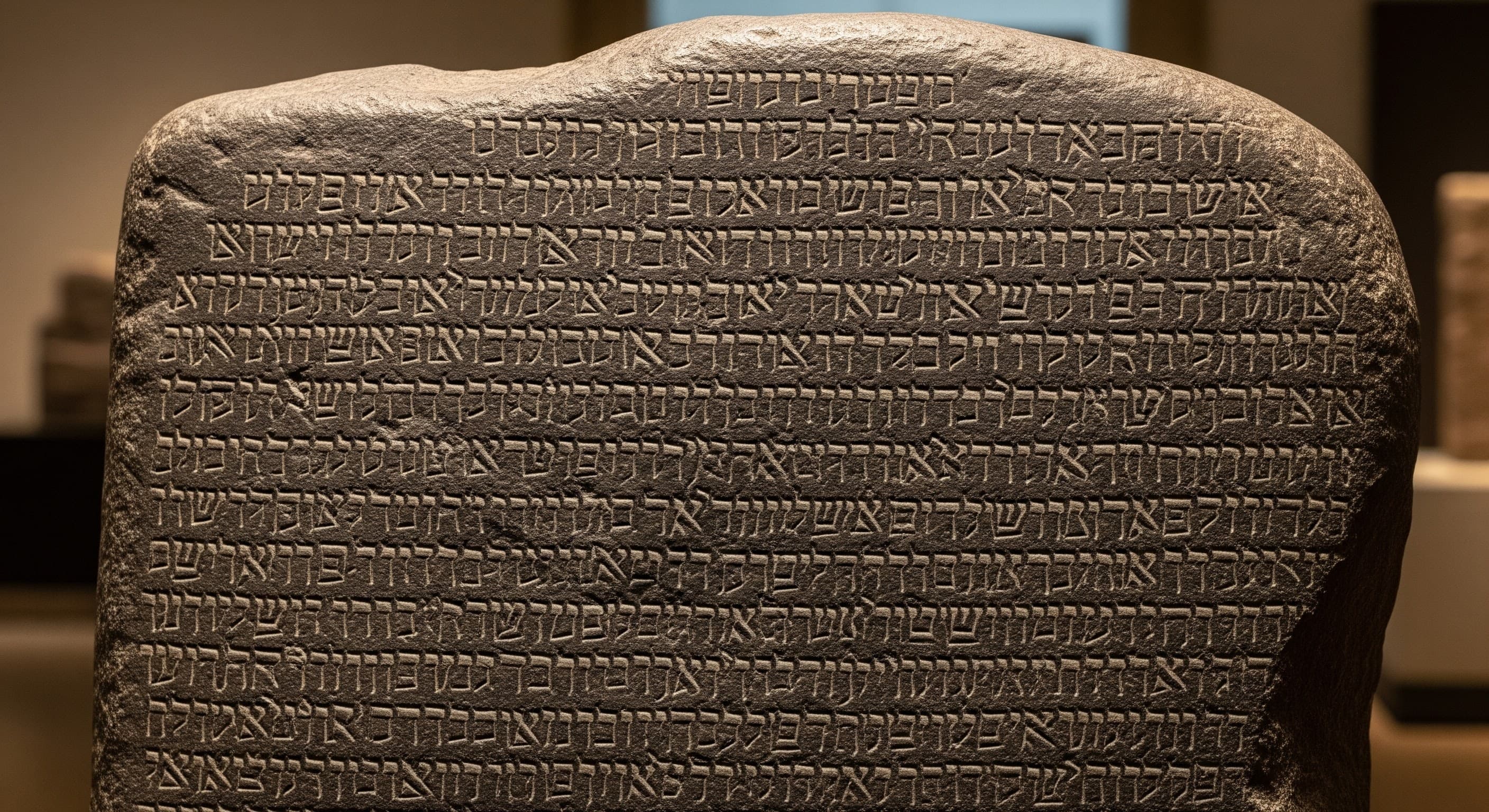
Take the Mesha Stele, also called the Moabite Stone. This inscription was set up by Mesha, king of Moab, in the 9th century BCE. In it, Mesha boasts of his rebellion against Israel and explicitly refers to Omri, king of Israel. That should stop us in our tracks. Here we have a non-biblical text, written by a hostile king, confirming that Israel under Omri exercised dominance over Moab.

This matters because the Bible presents the same historical setting in 2 Kings 3, where Moab rebels against Israelite control. The biblical account and the Mesha Stele are not identical, and they do not need to be. In fact, their differences strengthen the case for authenticity. When two opposing sides describe the same conflict from different angles, that is what real history looks like. Propaganda differs. Perspective differs. Pride differs. The event remains.
The significance of these discoveries lies in their source. The Bible describes a world of tangible nations, actual rulers, and authentic conflicts, a reality that the archaeological record is increasingly confirming to the detriment of claims that these accounts were merely fabricated.
The Testimony of a Rival. The Mesha Stele
Consider the Mesha Stele (or Moabite Stone), commissioned by Mesha, king of Moab, during the 9th century BCE. This non-biblical inscription contains a boastful account of a rebellion against Israel and explicitly names Omri, the Israelite king. This external, hostile witness confirms the historical setting found in 2 Kings 3, where Moab revolts against Israelite hegemony. While the perspectives differ—as is typical of real history versus sanitized propaganda—the core event remains a shared historical fact. This is not mythology; it is memory anchored in history.
The Dynastic Anchor. The Tel Dan Stele
Equally devastating to skeptical claims is the Tel Dan Stele. This Aramaic monument refers to both the "king of Israel" and the "House of David." This phrasing is vital for biblical apologetics because it demonstrates that neighboring kingdoms recognized Judah by a title linked to David's dynasty. Such evidence collapses the argument that David was a fictional invention of later authors; his role as the founder of a royal line is echoed in the testimony of his contemporaries.

Imperial Records: The Assyrian Witness
This pattern of external verification continues in the records of the Assyrian Empire. The Kurkh Monolith of Shalmaneser III specifically identifies Ahab the Israelite as a participant in the Battle of Qarqar in 853 BCE. This is no vague reference, but a direct historical anchor placing a biblical king within the documented politics of the ancient world's great powers. The question is no longer about the existence of evidence, but whether critics are prepared to follow that evidence to its logical conclusion.
Then we come to the Tel Dan Stele, one of the most important inscriptions ever found for biblical apologetics. This Aramaic inscription refers to the “king of Israel” and the “House of David.” That phrase matters enormously. It means that outside the Bible, in the testimony of a neighboring kingdom, Judah was known by a dynastic title linked to David.
That is devastating to the old skeptical claim that David was merely a fictional hero invented by later writers. No serious thinker should pretend this inscription answers every question about David’s life. That is not the point. The point is that the biblical presentation of David as founder of a royal line is not standing alone. It is echoed in external evidence. Once that happens, the easy dismissal collapses.
The issue is no longer whether believers have any evidence at all. The issue becomes whether critics are willing to follow evidence where it leads.
The same pattern appears in Assyrian records. The Kurkh Monolith of Shalmaneser III names Ahab the Israelite in connection with the Battle of Qarqar in 853 BCE. This is not a vague cultural reference. This is a direct historical anchor. Ahab, a biblical king, appears in the records of one of the great empires of the ancient world.
Then comes the Black Obelisk, which records tribute from Jehu in 841 BCE. Here again, Scripture’s world is not floating in pious legend. It is embedded in international politics. Israel appears before Assyria as a real kingdom under a real ruler in a real historical moment. Even more striking, the Assyrians continue to identify Israel by the name of Omri’s dynasty, showing how visible and influential that royal house had been in the wider region.
What does all this prove?
It proves that the Bible is not speaking into a historical vacuum. It proves that Israel and Judah were not literary inventions created centuries after the fact. It proves that the kings, conflicts, and political framework of the biblical record belong to the actual world of the ancient Near East.
The Black Obelisk further solidifies this history, documenting tribute paid by Jehu in 841 BCE. This record places the biblical world squarely within the realm of international diplomacy rather than pious legend. Israel is presented as a tangible kingdom with a legitimate ruler at a specific historical juncture. Notably, Assyrian records continued to identify Israel by Omri's dynastic name, testifying to the enduring regional influence of that royal house.

The Implications of the Evidence
Taken as a whole, these archaeological finds reveal that the biblical narrative is not isolated from historical reality. Far from being retroactive literary myths, the kingdoms of Israel and Judah are evidenced as genuine political entities. Their monarchs, military engagements, and governmental structures are firmly rooted in the documented environment of the ancient Near East.
To be clear, archaeology does not provide direct proof of the Trinity, the resurrection, or the theological complexities of covenant and redemption. The stones themselves do not preach the gospel. However, they perform a vital function: they verify that the biblical narrative is anchored in history, not fantasy.
This distinction is crucial because biblical faith is not founded on abstract spirituality, but on the conviction that God acts within history. Christianity is a proclamation of divine action in the real world. When archaeology validates the historical framework of Scripture, it reinforces the argument that the Bible should be engaged with serious intellectual attention rather than casual dismissal.
A Cumulative Case for History
Skeptics frequently apply a double standard to the Bible, demanding a level of exhaustive confirmation they do not require of other ancient texts. Dismissing the entire record because archaeology hasn't confirmed every single verse is not a scholarly method; it is a form of prejudice.
Understanding ancient history requires looking at cumulative evidence. The names, royal dynasties, military campaigns, and inscriptions of the 9th century BCE—Omri, Ahab, Jehu, Mesha, the House of David, Israel, Judah, Assyria, Moab, and Aram—provide exactly that. These are not mere shadows; they are part of a documented, historical world.
That matters because biblical faith is not built on vague spirituality. It is built on God acting in history. Christianity is not merely a system of ideas. It is a proclamation about what God has done in the real world. So when archaeology confirms the historical framework of Scripture, it strengthens the case that the Bible deserves to be read seriously, not dismissed casually.
Too many skeptics demand from the Bible a level of evidence they do not demand from any other ancient source. They act as though unless archaeology confirms every verse in the exact way they prefer, the whole record should be treated with suspicion. That is not scholarship. That is prejudice dressed up as method.
Ancient history is built cumulatively. Names, places, inscriptions, royal houses, military campaigns, and political relationships all matter. The 9th century BCE gives us exactly that kind of cumulative confirmation. Omri. Ahab. Jehu. Mesha. The House of David. Israel. Judah. Assyria. Moab. Aram. These are not shadows. They are part of a documented world.
For the Christian, this should inspire confidence, not arrogance. We do not need to exaggerate the evidence. We do not need to force archaeology to say more than it says. Truth does not need panic. The evidence is already powerful. It tells us that when the Bible speaks about the world of ancient Israel, it speaks from within history.
The skeptics said the Bible was detached from reality. The stones say otherwise.
The kings were real.
The dynasties were real.
The conflicts were real.
The world of Scripture was real.
And once that is admitted, the reader is no longer dealing with a book that can be brushed aside as religious fiction. He is dealing with a text that has earned the right to be heard.

Written by Edison Ade
I help founders build companies that can think, sell and move without waiting on them.
About EdisonOne idea every Thursday.
Master the System: weekly insights on strategy, systems and growth.