
Build Better Communities with the Power of Participant-Driven Creative Chaos

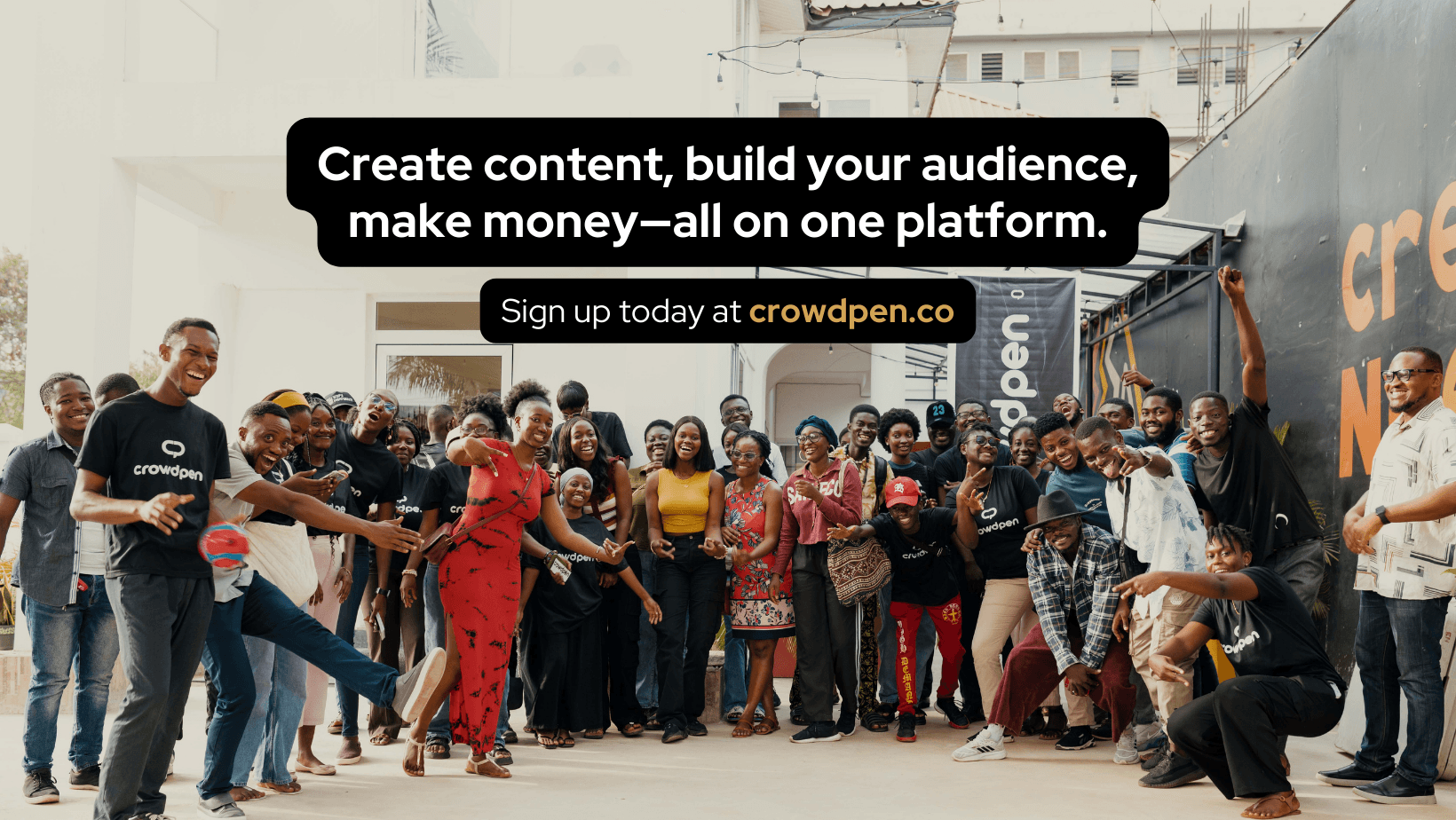
Most events still cling to the one-to-many broadcast. A headliner talks, the room listens, everyone goes home unchanged. Creative Chaos flips the physics. On September 13, 2025 (Accra), there’s no headline speaker, no headline panelist—because the research is clear: groups get smarter not when one person dominates, but when everyone contributes.
Consider the science. In landmark experiments at Carnegie Mellon and MIT, researchers found a “collective intelligence” factor that predicts a group’s performance across tasks. It wasn’t driven by the highest IQ in the room. It rose with social sensitivity and equal turn-taking—rooms where people notice one another and share airtime. (cs.cmu.edu, collectiveintelligence.ca)
That’s the operating system of Creative Chaos: many voices, frequent handoffs, and formats that spread the mic.
Psychological safety is the second pillar. Amy Edmondson’s research shows teams learn and perform better when people feel safe to take interpersonal risks—to ask naïve questions, test half-formed ideas, and admit what they don’t know. (Massachusetts Institute of Technology) Creative Chaos is engineered for that climate: quick prompts, low stakes, visible permission to try and iterate. When the room drops its guard, it picks up its creativity.
Third, diversity of perspective is not a feel-good slogan; it’s a performance advantage. Formal models and empirical work (Hong & Page and successors) show that functionally diverse groups can outperform groups of “the best” individuals on complex problems because they bring different heuristics to the search. (LSA Technology Services, Cambridge University Press & Assessment) When a poet meets a developer over an AR sketch, or a chef cross-pollinates with a product designer, the solution space expands.
We also avoid a classic trap. Traditional “everyone shout ideas in one circle” brainstorming underperforms because of production blocking (people can’t talk and think at once) and other frictions. (ResearchGate) So Creative Chaos uses distributed, time-boxed micro-activities—Live Art Battles, Creative Provocations, Collective Narratives—where multiple small groups produce in parallel. You move, you make, you vote; the room learns faster because the throughput is higher.
Paradoxically, the day also makes space for stepping away. A meta-analysis of 117 studies finds that brief incubation periods improve creative problem solving—the “aha” that arrives after you stop pushing. (Frontiers) Our flow alternates intensity with drift: sketch here, taste there, wander to the Digital Playground; ideas recombine while you’re not looking.
Underneath the formats is a deep motivation design. Self-Determination Theory shows that people engage more and persist longer when three needs are met: autonomy (I choose), competence (I can), and relatedness (I belong). (Self-Determination Theory) Creative Chaos is built to satisfy all three. Autonomy: no fixed script; pick your zone, propose a pop-up, shape the day. Competence: short challenges with instant feedback (your vote matters; your line lives on the story wall). Relatedness: you’ll meet weak-tie acquaintances—the very connections sociologist Mark Granovetter showed are disproportionately powerful for finding opportunities and spreading ideas. (UW Faculty Web Server)
And about time pressure: high, chronic pressure kills creativity in organizations, but purposeful bursts within a supportive climate can focus attention. Teresa Amabile’s field research—9,000+ daily diary entries—found that sustained time pressure reduced creative thinking; the antidote is protected “focus time” and meaningful engagement.
That’s why our prompts are short by design, yet surrounded by breathing room, reflection corners, and play. The objective is flow, not adrenaline.
So why should a community care about a day like this?
Because capabilities compound when practiced in public: noticing others, building on partial ideas, prototyping before you’re ready. Collective intelligence rises when the social graph is thick with trust and the idea graph is thick with recombination.
Creative Chaos is a rehearsal for the future we need—cities and teams where initiative is distributed, not centralized.
If you come, don’t come to be impressed. Come to be activated. Bring a book to swap, then trade stories about why it mattered. Vote in a Live Art Battle and notice your taste changing as you hear someone else’s criteria.
Add a sentence to the wall and feel your thought become our thought. Let a stranger’s question upgrade your project. Leave with five names you’ll text next week and one small prototype you’ll keep iterating.
The promise is not that inspiration will strike you from a stage. It is that inspiration will circulate—and you’ll help circulate it. The science says that’s how groups get smart, resilient, and bold. The practice is what we’ll do together on September 13.
If you’re skeptical, good—bring your skepticism. Bring your notebook and the half-idea you haven’t dared to test. The promise isn’t that inspiration will strike you from a stage. It’s that inspiration will circulate, and you’ll help circulate it. The outputs may be small—sketches, prototypes, introductions—but the spark they start keeps spinning long after the lights go down.
And we’re not stopping in Accra. Creative Chaos is a traveling lab for cities serious about creativity and connection. After Accra, we take the format to Lagos in November 2025 and Nairobi in December 2025—same principles, new collisions. Different streets, same invitation: no scripts, no stars—the room is the stage.
Authored by Edison Ade
I show founders how to use AI and better systems to grow faster, save time, and build something that lasts.
Full StoryMaster the System.
Weekly insights on AI strategy, growth frameworks, and business architecture.