
When Prayer Becomes Noise. Rethinking What We Do in the Presence of God

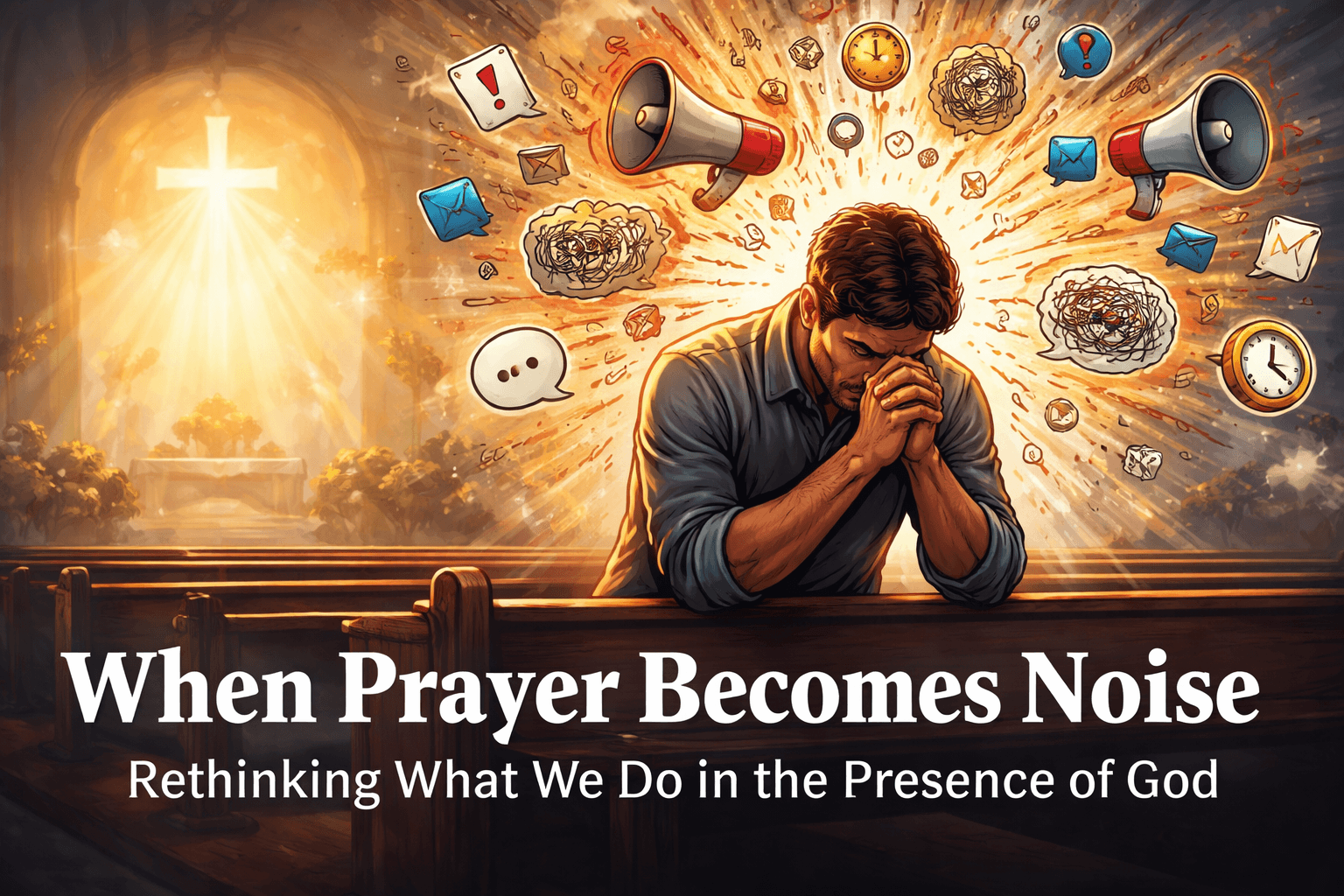
Walk into many church gatherings today, and you will notice a pattern.
The prayers sound familiar. Almost rehearsed. The same phrases. The same targets. The same manufactured urgency. Sounds familiar ?
Someone reads Scripture: "Do not be unequally yoked with unbelievers."
Moments later, the room is locked in "spiritual combat," praying against "ungodly relationships."
On the surface, nothing explicitly heretical is said. Yet, something feels misaligned.
Is it just me ? or is there something wrong with this approach.
Prayer is meant to be relational. Worship is meant to be orienting. Communion is meant to be grounding.
But over time, many prayer cultures have shifted from encounter to reaction.
Instead of coming before God to behold, align, and listen, prayer becomes a running commentary on everything we fear might go wrong.
Bad relationships. Wrong people. Corruption. Contamination.
We pray against more than we pray toward.
The result is a spiritual posture that is defensive and clueless. Very performative to say the least.
But you see, repetition is not the problem.
Scripture is full of repetition. The Psalms repeat. Jesus repeated Himself. The early church repeated prayers and creeds.
When repetition lacks mindful engagement, it loses its meaning and becomes empty.
Jesus was precise when He warned against "vain repetitions." He wasn't condemning long prayers, or even repeated prayers. He was condemning empty ones.
Prayer language that is inherited and never critically examined risks becoming mere noise, a familiar, religious sound. This noise suggests spirituality without necessarily nurturing it.
The counsel, "Do not be unequally yoked," is a principle of wisdom for aligning one's life, not a magical charm against relationship failures. Paul's message emphasized the need for discernment, maturity, and personal responsibility.
When instruction is twisted into warfare language, something subtle happens:
- Wisdom is externalized.
- Discernment is spiritualized away.
- Responsibility is replaced with deliverance.
Instead of asking, "Who am I becoming, and who am I binding myself to?" we ask, "What spirit must be rebuked?"
That shift feels powerful. It is also evasive.
When Prayer Carries a Weight It Was Never Meant to Bear
Prayer was never designed to replace character formation.
No amount of praying against "wrong relationships" substitutes for:
- Self-knowledge
- Emotional maturity
- Healthy boundaries
- Community accountability
- Honest counsel
When prayer tries to do the work of wisdom, it becomes strained. Loud. Anxious.
Many prayer meetings result in noise, not holiness, because the dominant emotion beneath the sound is a feeling of fear, which creates a sense of heaviness.
Worship Is Not a Threat Briefing
A place of worship should recalibrate our vision of God. Before we list what we are fighting, we should remember who we are standing before.
The early church prayed boldly, yes. But they also prayed simply.
"Lord, teach us to pray," they asked—not "Lord, teach us to shout louder."
A Healthier Posture
Healthy corporate prayer tends to have certain qualities:
- It is spacious, not rushed.
- It leaves room for silence.
- It emphasizes alignment over agitation.
- It forms people, not just energizes them.
- It trusts that God is already present.
Prayer that begins with gratitude usually ends with clarity. Prayer that begins with fear often multiplies it.
The church does not need less prayer. It needs more honest prayer.
Prayer that admits uncertainty. Prayer that seeks wisdom before warfare. Prayer that allows God to speak instead of filling every gap with words.
Maturity in faith is often marked by fewer words, not more.
If something feels off, it is usually because your spirit recognizes that prayer has drifted from relationship into ritual, from presence into performance.
That awareness is not a threat to faith. It is evidence of it.
The invitation is simple.
Return to communion. Return to gratitude. Return to listening.
God does not need to be summoned. He needs to be attended to.
Authored by Edison Ade
I show founders how to use AI and better systems to grow faster, save time, and build something that lasts.
Full StoryMaster the System.
Weekly insights on AI strategy, growth frameworks, and business architecture.